Why Teijaa Ragi is Different: The Truth About Himalayan Ragi
Walk into any health store today and you’ll find products labeled *Himalayan*, *Organic*, *Natural*, or *Stone Ground*. While these terms sound reassuring, they don’t always tell the complete story.
Take ragi, for example.
Many people assume that if a ragi flour comes from the Himalayas, it must automatically be better. The reality is more nuanced.
At Teijaa, we believe exceptional food isn’t defined by altitude alone—it begins with thoughtful farming, careful selection, and respect for tradition.
The Himalayan Advantage
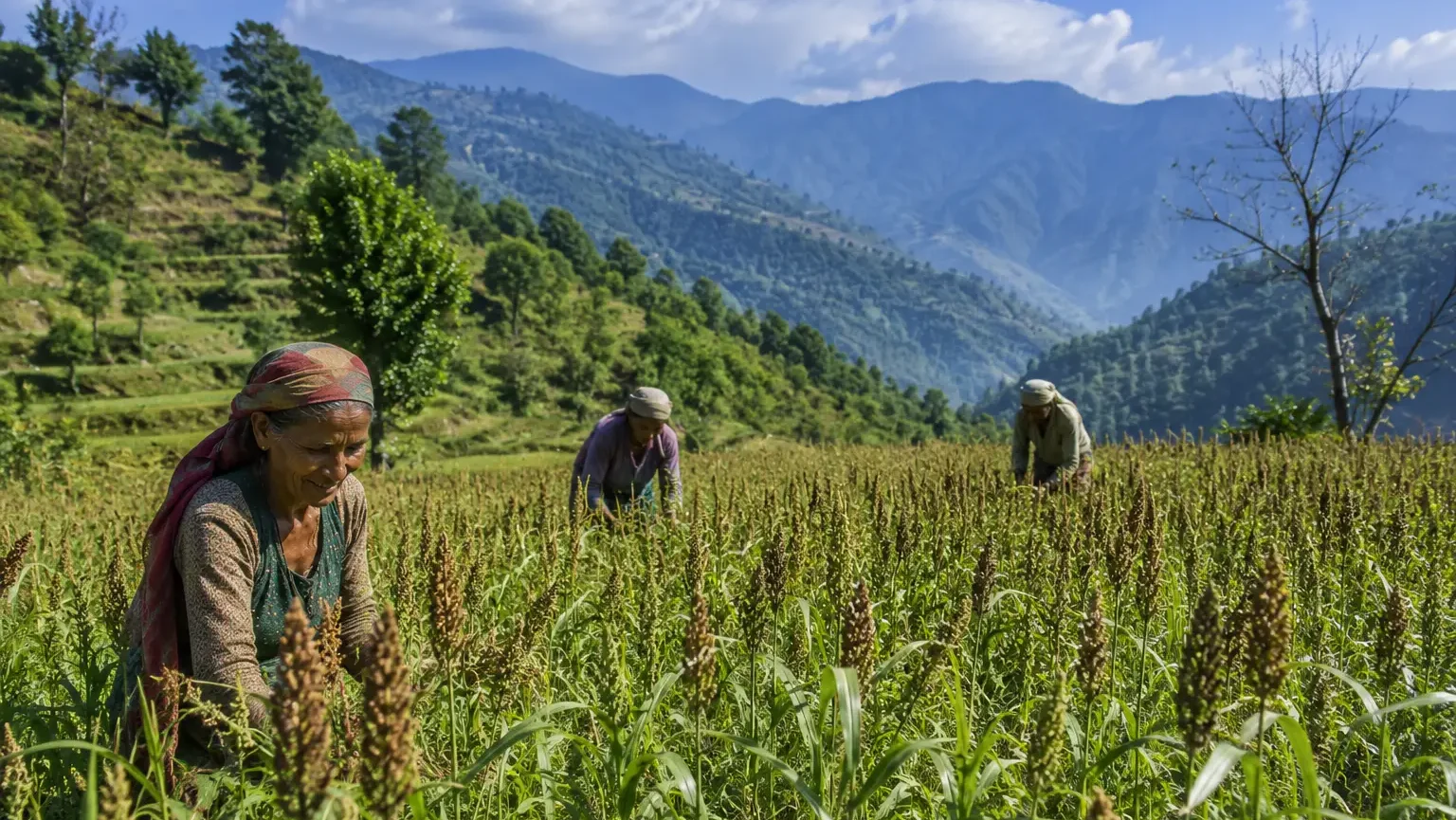
The Himalayan region offers favourable conditions for growing ragi: cooler temperatures, rain-fed agriculture, terraced farms, and generations of traditional farming knowledge.
But geography alone doesn’t guarantee superior grain.
Just as every vineyard in France doesn’t produce world-class wine, not every Himalayan farm produces premium ragi. Grain quality depends on healthy soil, suitable varieties, responsible farming, proper harvesting, storage, and milling.
Why We Choose Traditional Ragi
Many farmers in Uttarakhand continue cultivating traditional Mandua varieties that have naturally adapted to the Himalayan environment over generations. These landraces are valued for their resilience, flavour, and authentic character rather than maximum commercial yield.
Wherever possible, Teijaa sources these traditional varieties to preserve the genuine taste of Himalayan ragi.
Better Farming, Better Flour
Healthy soil, seasonal rainfall, and careful cultivation all contribute to producing high-quality grain. Equally important is harvesting the crop at the right maturity and handling it properly after harvest.
That’s why we don’t buy ragi simply because it’s grown in Uttarakhand. We work with sourcing partners who consistently demonstrate:
* Traditional cultivation practices
* Healthy, well-managed soils
* Carefully selected local varieties
* Responsible post-harvest handling
* Reliable quality across seasons
Every harvest is evaluated individually because nature doesn’t produce identical crops every year.
Stone Ground the Traditional Way
Once carefully selected, our ragi is stone-ground using a slower, gentler process.
Unlike high-speed roller milling, stone grinding generates less heat, helping preserve the grain’s natural aroma, flavour, and traditional texture. It’s not about making exaggerated nutrition claims—it’s about respecting the grain through minimal processing.
Transparency Over Marketing
The food industry often relies on simple claims like “Higher Altitude” or “Superfood.” In reality, the quality of ragi depends on genetics, soil, climate, farming practices, harvesting, and processing—not altitude alone.
Rather than making promises we can’t verify, we focus on what we can stand behind:
* Thoughtful sourcing
* Careful grain selection
* Traditional stone grinding
* Complete transparency
The Teijaa Difference
Our confidence doesn’t come from the word *Himalayan*. It comes from every decision made before the flour reaches your kitchen.
Where was it grown? How healthy was the soil? Which variety was cultivated? How was it harvested? How was it milled?
These questions matter far more than a label on the front of the pack.
Because truly exceptional ragi isn’t created by altitude alone—it’s created by the people, the land, the farming, and the care behind every harvest.