| Feature | Indigenous A2 Badri Cow | HF (Holstein Friesian) Crossbreed Cow |
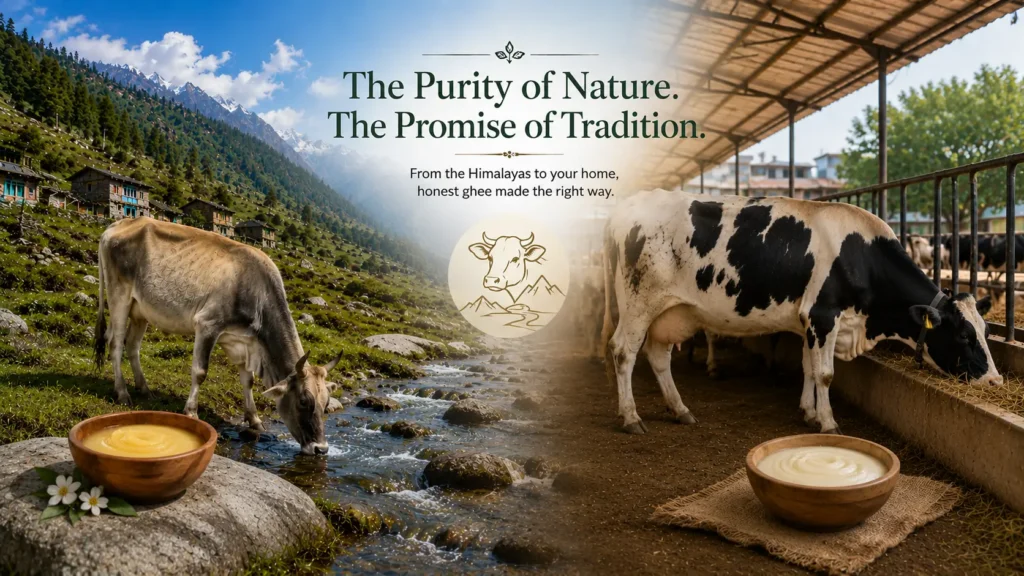
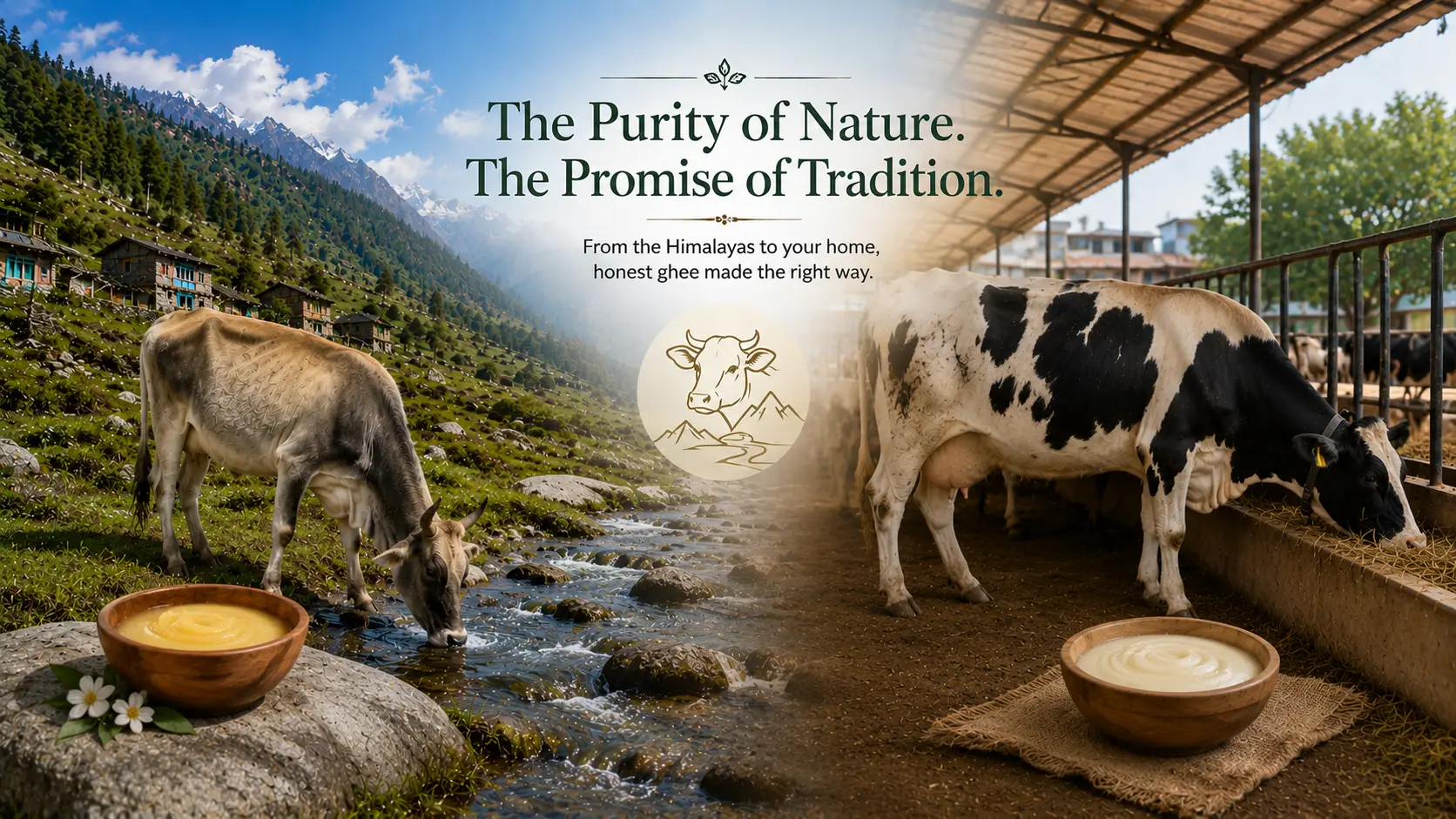
| Origin | Native Himalayan breed from Uttarakhand | Exotic dairy breed originating from Europe, commonly crossbred in India |
| Primary Purpose | Adapted for resilience, traditional dairy farming | Selectively bred for high milk production |
| Average Milk Yield (per day) | 1–4 litres (depending on nutrition, age, and lactation) | 15–35 litres (can be higher under intensive commercial farming) |
| Milk Protein Type | Predominantly A2 beta-casein | Usually contains A1 and A2 beta-casein (varies with genetics) |
| Body Size | Small, agile, lightweight | Large, heavier body frame |
| Climate Adaptation | Naturally adapted to Himalayan terrain and harsh weather | Performs best under managed farm conditions with controlled nutrition |
| Natural Grazing Habit | Free grazing on Himalayan grasses, herbs and forest vegetation | Often stall-fed with cultivated foders, silage and commercial feed in dairy farms |
| Typical Diet | Wild grasses, medicinal herbs, shrubs, local fodder, seasonal leaves | Green fodder, dry fodder, maize silage, concentrates, oil cakes and mineral mixtures |
| Requirement for Intensive Feeding | Low | High to sustain high milk yield |
| Disease Resistance | Generally more resilient to local diseases and climate stress | Comparatively more management-dependent |
| Ghee Yield from Milk | Lower due to limited milk quantity but rich in traditional flavour | Higher because of larger milk volume |
| Milk Availability | Limited and seasonal | Available in commercial quantities throughout the year |
| Farming Style | Small-scale, traditional and extensive | Commercial and intensive dairy farming |
| Environmental Footprint per Animal | Lower external input requirement | Higher dependence on feed cultivation, water and farm infrastructure |
| Cost of Production | Higher cost per litre due to low milk yield | Lower cost per litre because of economies of scale |
| Market Availability | Limited and premium | Widely available |